
Dominion for Defense

An installation that sees, reasons, acts—and adapts.

Agentic command, control, and execution for defense installations.

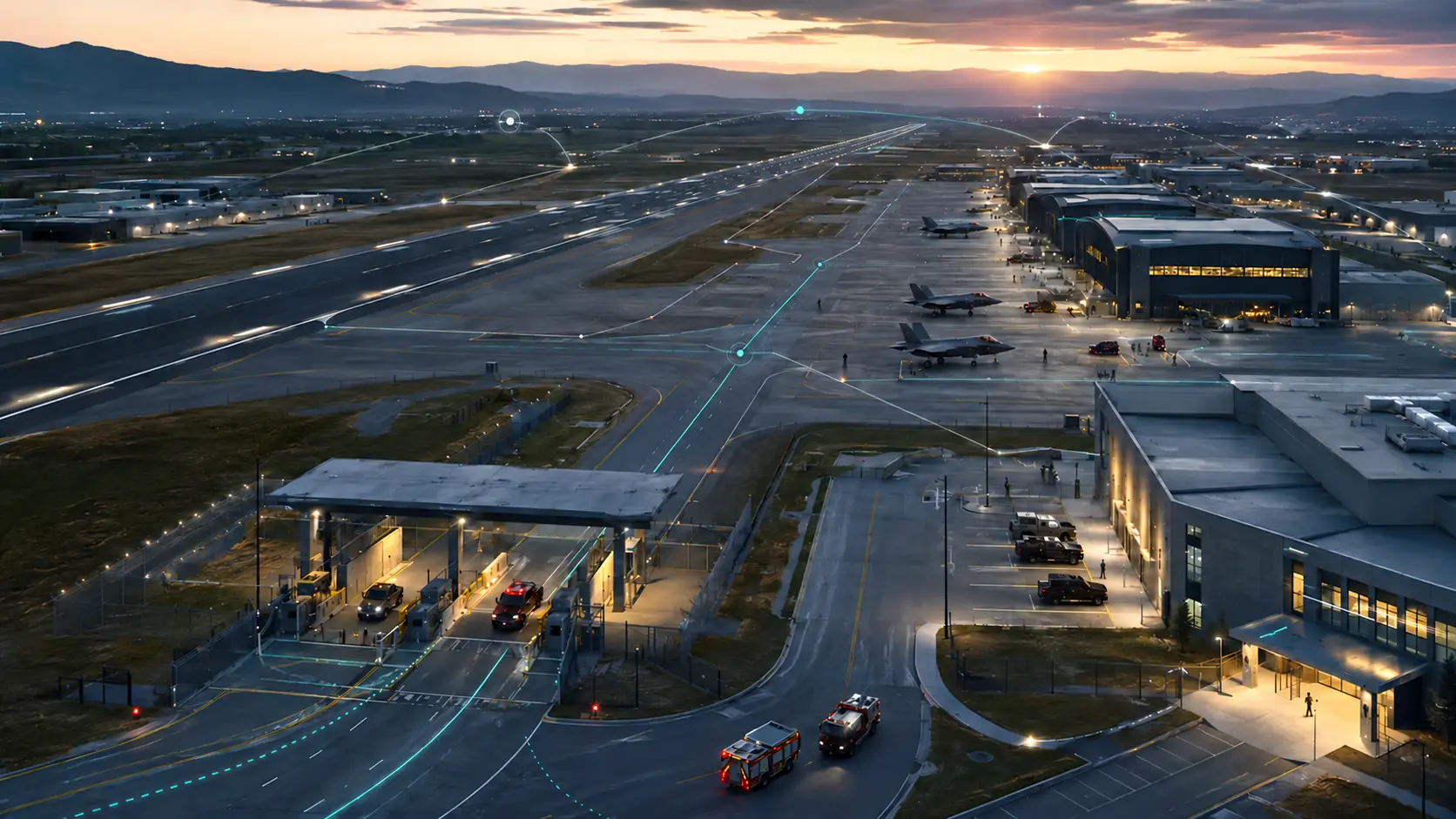
The Intelligent Installation Management System (I2MS) is OnSeen’s agentic AI command, control, and execution platform. Dominion, its Resource Allocation Engine, determines what changing conditions mean for the mission, develops alternative responses, and tests whether available resources can execute them.

I2MS puts those decisions into motion through connected systems and field teams, monitors results, and autonomously adjusts work already underway.

Dominion determines the resource allocation.
I2MS turns it into installation-wide action.

Standard blue Dominion orb

Dominion

The Agentic Resource Allocation Engine

Dominion recognizes when the current resource allocation no longer fits the mission. It traces the operational effects, develops alternative courses of action, tests them against real constraints, and determines how scarce resources should be used next.
I2MS

Command, control, and execution

I2MS turns the allocation into assigned work. It tasks teams, redirects resources, updates routes and schedules, and monitors execution. As field reports return, Dominion reassesses the mission and I2MS changes the affected work.

State the objective.
Put connected tools to work.

TAK becomes an agentic AI mission partner.

Through OnSeen’s TAK Agent Framework, Airmen state an objective in voice or chat, and AI agents select and invoke the connected tools needed to accomplish it. The agents prepare the required information and coordinate actions across participating plugins.

Connecting those actions to I2MS gives them installation context. Knowledge Core supplies relevant plans, procedures, and operational knowledge. Dominion determines what the situation requires and how available resources should respond. I2MS carries that response into field tasking.

The relationship continues after the initial request. Relevant events prompt agents to reassess, while field reports and execution results inform the next allocation. Airmen gain a mission partner that stays engaged as conditions change.

One platform.
Expanding mission capacity.

I2MS connects emergency response, installation defense, planning, and recovery through the same resource-allocation and execution architecture. Completed work establishes the foundation. Current development and planned applications extend what that foundation accomplishes.

I2MS connects the whole installation through one agentic command, control, and execution platform.

01

Emergency Management

The incident changes. Dominion autonomously rebuilds the response.

Dominion autonomously develops and tests emergency response plans against available personnel and equipment. It reasons across first responders and installation support, identifying when one assignment would leave another task short.

As the incident changes, Dominion reallocates scarce resources and revises dependent tasks together. I2MS tasks field teams through connected systems, monitors results, and updates the affected work. The response keeps adapting while teams are already in action.

02

CBRN Response

Reallocate the response as the hazard changes.

Chemical, biological, radiological, and nuclear response development connects sensor detections and authoritative hazard forecasts to Dominion’s resource reasoning. Dominion assesses how the changing hazard affects mission priorities, responder safety, and available resources, then develops and tests alternative responses.

I2MS carries the resulting allocation into field tasking, protective actions, cordons, routes, and overlays. Updated hazard information prompts Dominion to autonomously reassess the affected response and I2MS to revise dependent work across command and field tools.

03

Integrated Defense

Coordinate defenders and installation resources as the threat moves.

The planned integrated-defense configuration puts Dominion to work on threats to critical installation assets. It reasons across mission priorities, available defenders, and resources already committed elsewhere, developing and testing alternatives that account for competing demands.

I2MS carries the allocation into tasking for teams and connected systems. As the threat moves and field results return, Dominion autonomously reassesses the response and I2MS redirects affected work. The installation responds as one connected operation.

04

Risk Management and Planning

Find the failure. Develop and test the correction.

Intelligent Integrated Risk Management and Planning (I2RMP) examines whether installation plans can succeed with documented resources and governing requirements. Dominion finds unsupported assumptions, traces dependencies, and identifies where competing demands make a plan unworkable before an incident exposes the gap.

Planned autonomous correction would carry that analysis into revised plans. Dominion would generate and test alternatives, revise affected drafts for Government review, and reassess recommendations when planning inputs change. The work continues beyond the initial assessment.

05

Strategic Planning

Determine what the mission actually needs from the investment.

The Strategic Planning Module (SPM) starts with the mission outcome behind an investment request. Phase I developed and exercised a method for identifying the underlying requirement, generating materially different alternatives, and testing them against cost, timing, mission risk, and resource constraints.

The planned software implementation would autonomously revisit affected assumptions, retest alternatives, and update recommendations as requirements and conditions change. The investment case stays connected to the mission it must serve.

06

Base Recovery

Sequence the repairs. Reallocate as recovery unfolds.

The planned Base Recovery Module puts Dominion to work on restoring mission capacity. It connects damage assessments to restoration priorities, develops alternative recovery plans, and tests work sequences against available crews, equipment, and dependencies.

Later stages extend those plans into autonomous coordination of crews, equipment, and repairs. As field results reveal new damage, delays, or resource shortages, Dominion would reassess the allocation and I2MS would redirect affected work, keeping dependent repairs aligned with mission priorities.

A perimeter breach triggers more than an alert.

Illustrative mission thread for a planned integrated-defense configuration

  1. Detect the breach

    A camera detects movement near a restricted perimeter. Dominion determines what may be at risk and develops a response around available patrols, surveillance assets, routes, and time.

  2. Launch the response

    I2MS tasks an available unmanned aircraft to investigate, directs a Security Forces patrol toward the breach, and sends routes and operational overlays to field tools.

  3. Replan as the threat moves

    Video shows the intruder moving toward a mission-critical area. Dominion reassesses the threat and reallocates the response. I2MS redirects patrols, updates tasking, and coordinates the affected work.

Detect the breach. Launch the response. Replan in contact.

Installation intelligence belongs in a connected defense environment.

I2MS’s integration model connects specialized systems through shared information, agent interaction, and operational tasking. The Orchestrator API lets I2MS invoke capabilities in connected systems, send assignments, and receive execution results.

Dominion contributes installation knowledge, resource reasoning, and executable response plans. Other connected systems contribute their own information and capabilities. Together, they connect operational demands with what the installation can deliver.

Built for the Air Force.
Built to act.

Autonomous resource allocation

Dominion develops executable response plans and allocates scarce personnel and equipment as conditions change. I2MS turns those decisions into responder tasking. Air Force Emergency Management demonstrations established both autonomous and semi-autonomous execution.

Command connected to the field

I2MS delivers assignments and task-specific checklists directly to TAK. Responder locations and execution status return from the field, keeping command connected to the work. Voice interaction, weather information, and WinTAK support extend that connection.

An operation that keeps adapting

The assignment starts the loop. Field results drive Dominion’s reassessment, and I2MS revises the affected work. Resource decisions, field actions, and operational feedback stay connected as the mission evolves.

Commanders set intent.
I2MS carries the work forward.

I2MS autonomously performs configured allocation and execution work. Commanders establish mission priorities and approval limits, while Incident Commanders direct emergency response. Permissions, confirmation requirements, and activity records preserve control as the platform acts.

One connected installation.
Expanding mission capacity.

Dominion autonomously allocates resources. I2MS coordinates people, assets, and tasks as one connected system, adapting execution as field results return. Each new capability strengthens the shared platform and compounds its value, expanding what the installation accomplishes with the resources available.